Friday, September 18, 2015

We haven't Given Up!

The end of last month marked the end of 3 full month of us making over our money by making over how we deal with our money. When we realized that we celebrated by pulling out the bottle of Sparkling Cider we had saved for our anniversary but when we were both sick forgot that we had it. We celebrated that we had stuck with it, that it was getting easier, and that we were slowing changing our mindset and starting new habits.

So last month's grocery budget:
It was blown. I can't find all the receipts so I can't give you exact numbers (hence I didn't report at the time), but we decided to support a school fund raiser, that ended up costing us a lot more than we initially thought. Just about everyone in our family got sick, needed a doctor visit and a prescription, initially we budgeted that the random prescription would come out of the grocery/household budget, but this experience changed our minds. After everyone got their unexpected prescriptions we were down out of grocery a little over $20. That hurts when you're only doing $200 a month. Add to that our fund raising budget fiasco and our grocery budget was left to $140. Early in the month my parents stopped at Costco for me and we ended up having them pick up more than we should have given the big picture. Opps. I had gone shopping early in the month to pick up a couple "stock up" items we use constantly, store well, and were the best price I've seen in years. Oh and each trip to the pharmacy, also ensued an item or two to make life easier for all the sickies or on me making food for sickies. When all was said and done and I went to the store for my once a month shopping I had only $75. We upped the grocery budget for the month, taking from our snowball (and a few other places in our budget to give us $110, so I could get everything we needed for a full month. But I felt like a failure. How did it get so out of hand. How it all those things add up so fast? Why does living feel like it costs so much?
But we made it through the month. We've made it through 3 months. We've paid off my student loan and my mini van. We have made progress!

Friday, August 7, 2015

Squaring the Lean Process, Food Storage, and my Life

My dad, for a living, teaches companies about the Lean process. Specifically with manufacturing but also helps non-manufacturing companies apply it to their output.
I don't claim to know a whole lot about it. I know he is good at what he does and is passionate about it.
Now one principle I do feel I understand and felt it could help everyone is the idea of eliminating waste through excess inventory. For example you always have one extra on hand. For example, I will use peanut butter- if you have one you are using, you then have one in your cupboard or if you don't have that one more extra you have one on order or on your shopping list. With this process you never run out of what you need and you never waste things just sitting there.
I am sharing this because I felt it is a great method, an easy method, for running our kitchens. I have been using it to help rotate items in my kitchen.
Once you get to this point of having the one in reserve, it is easy to think about, each time you pull a new one out of storage, you add it to your shopping list.
This works well when you start to stock up for a "year supply" or a "prepper" storage.
Sometime when there is a sale price you add another to your rotation. So then you have the one being used, the one in the cupboard, and now one extra. In order to build up an actual year supply of things you are rotating you then continue to add it to your shopping list every time you pull one out of storage. With items you use a lot- like cans of soup, you can keep a tally of how many you need to replace.
I am not perfect at this method, and it is really easy to do when you have only one item in your storage. It is still easy to keep tract of when you have two items in the storage. But it is harder to rotate perfectly when you have lots of items. The more of one item I have I use a pallet rotation (a box that holds about 12 or whatever a bulk purchase came in), I use that at a time, and when it is used up and I start a new one then I add x (the set) to my shopping list. This helps with items that I go through a whole set each month.
The real key to having a food storage is having items that you actually use and can rotate. Sure having dehydrated food in your storage is a great way to fill out your year supply, but they only have a 10 year shelf life and if you don't use it ever in your cooking then it will go bad and eventually become unusable. Yes it is still food, and if it came down to it you're going to use it (see post on Lessons learned from using 30+ years old Wheat). But there is a point where it is no longer usable and no amount of "it is food" is going to change the fact you can't eat it because it isn't safe to eat anymore.
So if you're trying to get started with a year supply- start building a supply with things you'll use. Then start learning how to use more traditional items in your storage. Start buy purchasing the smaller amounts at the store. Then when you've learned how to make meals with those items, buy them in the bulk storage items. Plan meals that incorporate items from your food storage so that you can start to rotate it. Make sure to use the Lean process of knowing when to order more so you are keeping a storage and not just depleting. Yes in times of plenty you don't have to use a lot of your food storage. But at least one meal a week should incorporate food from your long term food storage. Here is a great list from BYU's website that lists what is the minimum you should have for each person in your family.
Lately I have been learning how to use beans- pinto, black, kidney, chick...
Beans are a great long term food storage item, but up until recently I have not been successful in using dry beans to cook with. They never seem to taste right, and always seem to be too hard still. It hasn't seemed to matter how long I actually pre-soaked the beans for. Using dry beans isn't only a good way to rotate your supply but is also a great way to save money too. Dry beans are so cheap compared to the cans. I recently have been trying "re-fried beans" made in the crockpot. I am learning and the more I learn, the more I incorporate less can beans into our food storage and more dry beans. 

Thursday, August 6, 2015

Lessons Learned from using 30+ year old Wheat

So if you didn't know already - member of the Church of Jesus Christ of Latter-day Saints aka Mormons are commanded to keep a "Year Supply" Once you have a year supply of food, water, toiletries- you are suppose to aim for a 5 year supply and then a 10 year and then a 30 year supply for your whole family.
Guess you could call Mormons the original "preppers".
photo from A Prairie Homestead
Who has space for that? Tiny house living, using every space, has nothing on Mormons who have achieved the 30 year supply for a family of 7+ people.
Everyone who grew up in the Mormon church with food storing parents knows these realities:
picture from New Life on the Homestead blog
Under the bed is a convenient place to store food- but it is also a great way to keep your kids from shoving toys and stuff under it when it is time to clean up.
With the food all stored away under the bed it is hard to rotate. 
And my mom doesn't actually make bread (and when she did it wasn't from freshly ground wheat) and only actually used the wheat that was stored maybe once a year. Good thing wheat has a canned shelf life of 30 years.... only problem is what do you do with it after 30 years? My mom has always said that it is still food and she doesn't think the fact that it is over 30 years old will matter much at the end days and that its not like "oh yesterday was 30 years now its too old to use" will really matter.

My approach all these 7 years of marriage has been to to buy and store more of what I am actually using and try to find recipes that I can use the stuff I have and rotate it. If we had to live solely off what we have in the house I think we could last 4-6 months with some creativity and some boredom from the same foods. - so no we have not achieved the "Year Supply" levels. But I also haven't tried to can or use the storehouse to buy in food storage bulk levels.

So last year I wanted to start making some of our own bread. I started with Pizza.  I figured that was probably the most fool-proof place to start. But I wanted to use whole wheat flour. I had been using it to make all sorts of things we eat (I normally try to do half whole wheat flour and half cheap store white stuff). But I found that when you start using 5 cups at a time the whole wheat stuff became crazy expensive. I was at a friends house and she had a wheat grinder and was using it while I was there. She had got it not long after they had got married (almost 15 years ago) and it had been going strong all that time. After talking to my husband about how we could afford a wheat grinder we decided to ask both our parents for amazon gift cards for Christmas so we could use all the gift cards and some of our own money and afford to buy the grinder. When I told my mom they even threw in my birthday present money. So we now have a wheat grinder. 

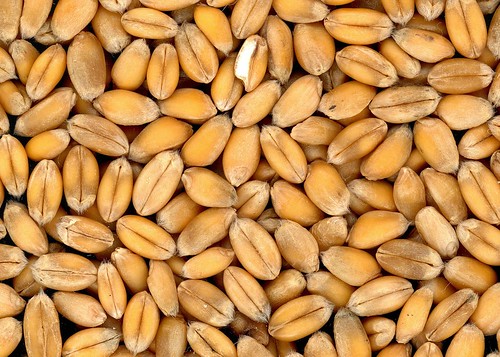
This brings us to 30+ year old wheat. Even before we started to cut back and keeping to a budget, I asked my mom for her oldest wheat. My thoughts were, if it is still good- like it sort of should be (my parents go married in 1980 I was born in 1981, and most of the wheat in my parent's house has 1983 written on it- I think they used their tax refund that year to buy a 30 year storage of wheat . So it is just over 30 years old, lets see if it is good, not like my mom is using it and rotating it. I might as well. I could even start to replace hers with some new wheat when I start buying it for my family.

The wheat she gave me was marked 1979..... it came from my grandma's house and when she passed away my parents added it to their storage. So I've been using 36 year old wheat.

What have I learned?
  1. That my mom was right- it is still usable. Not wonderful, but edible. And if we were all having to live off of a 30 year food storage supply, we would all live.
  2. It takes more than you would think, if the recipe normally uses 5 cups of wheat for the bread recipe it will take more like 7 cups to get the consistency of stickiness you are use to for letting it rise. This has other implications that you have to adjust to. I am not that good at making bread to tell you how to fix those. But it ends up really "flour" tasting. I have tried to add sugar and/or salt last minute and sometimes that seems to help.
  3. It makes great puffed wheat for breakfast -not wonderful, but it is one of the most edible ways to eat it.
  4. The gluten in whole wheat is harder to work with (because there is less gluten per ounce of flour) then white flour- but it is even worse with the expired wheat, the gluten might as well not be there. If I don't add any white flour I will get no rise from the gluten. I have started adding the white flour at first and getting it good and sticky and then adding the expired wheat flour.
  5. Works best for anything when you grind it and throw it in, if you grind a lot at once, the longer it sits (even a day) it starts to get an older taste to it.
  6. Actually it works really well as a thickener in a gravy mix. I normally use corn starch but it works surprisingly well. 
  7. It makes decent Swedish Pancakes and cracked wheat. Haven't made pitas but I wouldn't be surprised if it worked decent for that too.
  8. It can't make cookies for the life of it.- so in the Zombie apocalypse there will be no edible chocolate chip cookies. It is just a mess.  The batter runs and runs and never rises. 
  9. Kids don't seem to notice. I can make a pizza with the 30 year old wheat and one made with all fresh ground new flour and the kids eat both the same.
  10. It over cooks faster- you have to watch it more it seems to always be fully cooked faster.
  11. That when it comes down to it, we can all be grateful for our parents who stored it and kept is around because it is still food. 
  12. I look forward to using all the old stuff up quickly because I would love to get to the newer hasn't expired stuff soon than later.
  13. Once I have a supply, I will rotate it and use it.

Tuesday, August 4, 2015

Laws and Principles of Substitution

Something I haven't though a whole lot about before but I find myself thinking about it everyday is the principles of substitution.

In economics- as a product's cost increases some people start substituting or replacing the high cost product for a lower cost, or more available product. As more people make the switch to a substitute the demand (and often the value/cost) of the substitute item increases.

Well as I have streamlined our grocery bill down to more of the bare necessities I have seen this working in my house. For some of the items I have not purchases, or have not purchased it in the amounts that I use to, I tried to anticipate what items my family would choose as their substitute items. In some instances I anticipated correctly, and other things I did not satisfy my family.

For example-
1- Instead of buying individual servings yogurt. I decided to save by buying it in a tub. No one wants to eat it. My husband is the biggest yogurt consumer in our home. I learned through this experience that he values individual serving size- so he knows exactly how much he has eaten and the calories and is not tempted to eat over the serving size. He will just choose not to eat the item. He is also not a fan of the suggestion I could pre-measure out servings and put them in the fridge. He wants the calories right there to remind him of the exact serving size.

2- We don't have as many "pre-made snacks" anymore. I have tried to make some, but no one wants to eat them as much. In addition, everyone wants something they can just grab. We use to have lots of fruits that was good for grab and go. We use to have bagged fruit snacks or other treats that you can eat right away. Normally I have had a variety of crackers for snacking on too. I bought more animal crackers to replace most of it and more carrots. Instead my family hasn't wanted to eat the animal crackers as much as I thought they would, and the carrots haven't gone over as well as I hoped.

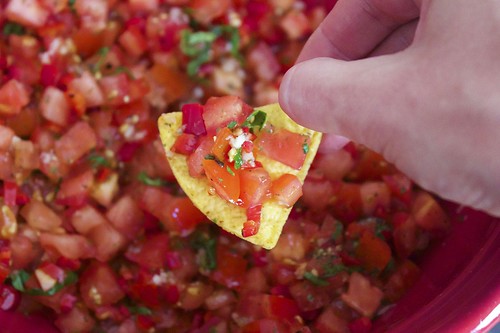
3- What has everyone been reaching for? Tortilla chips and salsa. Which has caused us to run out of chips and salsa before the end of the month- and since I didn't count on this, it has messed up my meals because I relay on both of those items for meals on our calendar. So for dinner on Sunday instead of having Pulled Pork Taco salad stacks - we had Pulled Pork sandwiches. So then I used up more BBQ sauce and bread then I had planned on. Also almonds have been a favorite. I know neither of these things are horrid for you not bad choices for substitutes, but I didn't anticipate those choices. Last month, I made ginger snaps to be a substitute for snacks- but my family gobbled them up in one day.

So you won't be able to anticipate all the substitute choices your family will make. But giving yourself some wiggle room to make your won substitutions when the need arises is good to have a back-up.

Wednesday, July 29, 2015

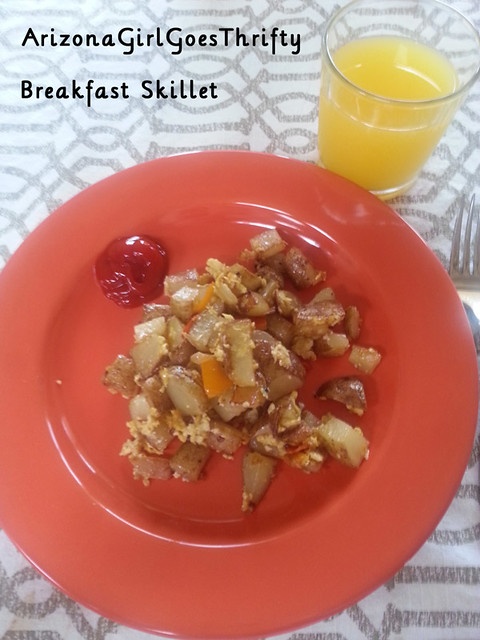
Cheap Meals: Breakfast Skillet

This use to be one of those meals that I did only on Saturday mornings to make my husband happy. But as we reevaluated our budget and did some math, potatoes are a cheap carbohydrate for breakfast than toast- even with our 50 cent loaves. We use to eat eggs and toast every other morning for breakfast and we have started replacing some of those mornings with breakfast skillet.

Need:
  • oil
  • 3-4 small/med potatoes
  • 1 small onion
  • 3-5 eggs
  • options: chopped peppers, 1/2 c shredded cheese, salt and pepper to taste
suggestions- use a cast iron grill and it make a great dinner skillet- just add some veggies.

Instructions:
Heat the oil in the pan. Chop up all the veggies. When the oil is hot add the potatoes to the pan. Don't let the stick to the pan too much. Add the onions, and if you're doing peppers. Once the onions are mostly cooked (lightened up to the "translucent" stage). Make space in the middle, crack the eggs in that space. Scramble them.  Mix it all together. Add cheese if you so desire and salt & pepper. Serve as is or with salsa or ketchup.

download the recipe card- right click and "save as"


Monday, July 27, 2015

Pork- Its what's for Dinner

Long time ago, back when my husband and I were doing Weight Watchers. We started cutting back our portions of meat. We started to look at the amount of meat in our meals and decided that we didn't need to eat that much meat. I started looking into ways to cut back our meat. Adding lentils  - great way when you're using a ground meat, but less helpful when using shredded meats. The price of ground beef went up and we started looking at alternative cheaper somewhat healthy meats. Using more beans in Mexican-inspired dishes help with shredded meats.

Over time we have moved to eating more pork. The cost of chicken has gone up too. It took me a while to figure out things to make with pork.

When I buy pork I try to grind some of it. We have a Kitchen Aid grinder attachment. Then we have ground meat to use in any recipe that I would normally use ground meat for (Shepherds Pie, pasta, meat balls, sloppy joes).

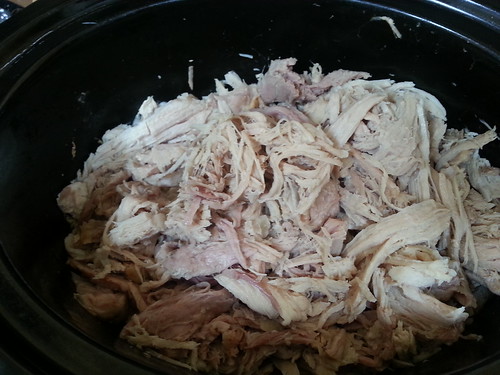
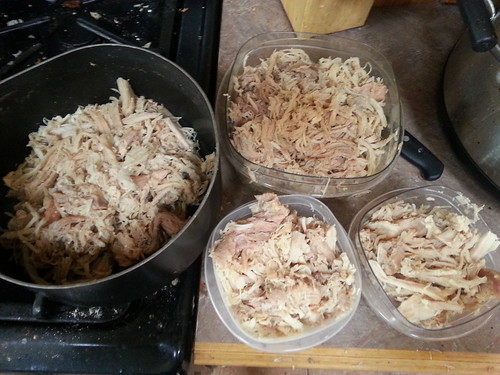
The rest of it I freeze and then cook in the crock pot. I put about 3 lbs in the crock pot, first cutting off big sections of fat. I'll add some water to the pot so it won't burn. Also remember that the cut of pork -shoulder, roast, butt, are all less important. But not chops or ribs. I look for packages that are cheaper but are boneless when possible.

3 lbs will make 6-8 meals for my family of 6 (granted one baby and twin girls).
Meals:
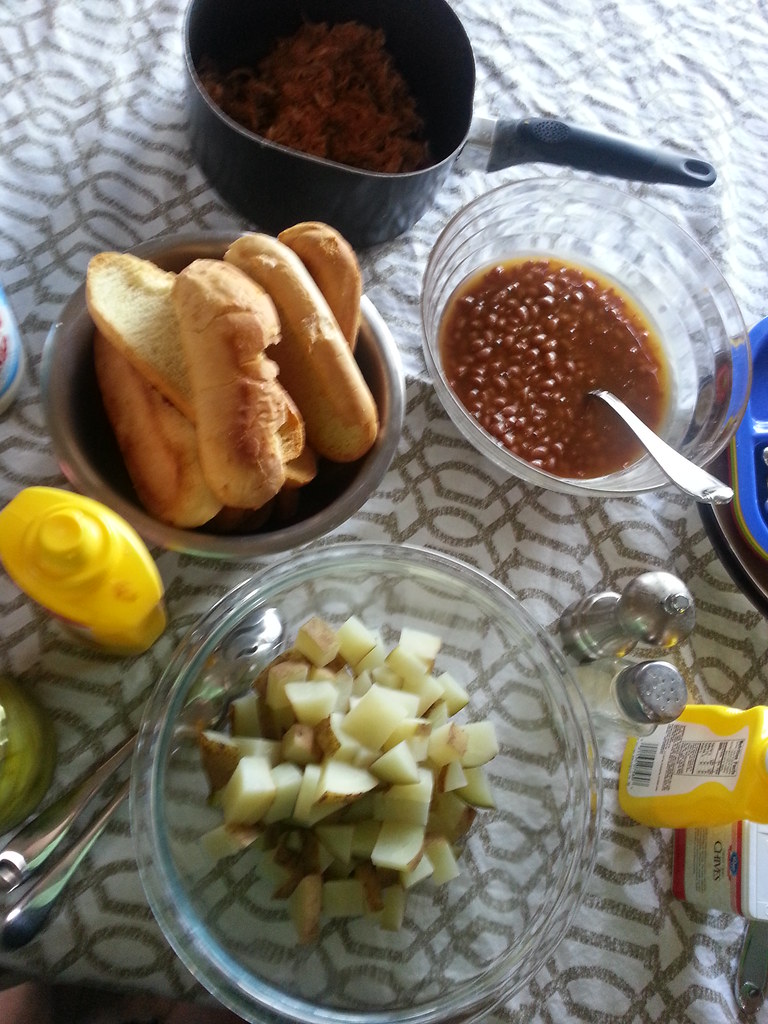
pulled pork sandwiches (takes the most meat)
pulled pork on rice
pulled pork tacos
pulled pork taco salad
Fancy Burritos (like Chipote)
Nachos
Quesadillas
Tamales
Enchilladas
Baked Tamale Pie
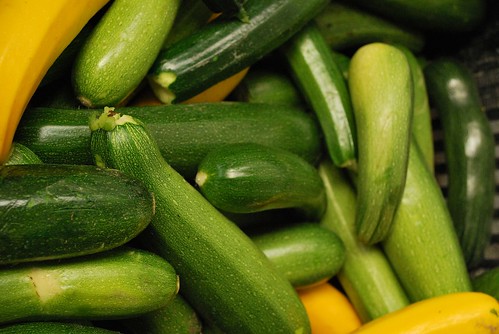
Shredded Pork over Zucchini
Taquitos *never made these myself, but have had lots of friends suggest it

Saturday, July 25, 2015

Vegetables for Less (and some fruits we use like vegetables)

When doing once a month grocery shopping you have to recognize that your fresh vegetables that you buy at the store are not going to last the whole month before going bad. I advocate a mixture of mostly fresh and frozen veggies with a few cans in there. I am sure some of you have noticed how few veggies it seems like I have on our shopping lists and there are reasons for that (I buy bulk so it is a one item on the list, free veggies from friends gardens, frozen veggies, and a pantry full of food storage canned veggies).
But this is a great time to talk about some ways to get lots of fresh affordable veggies. And when I say veggies I am not using the scientific definition. Instead I'm referring to non-sweet mostly green and yellow foods that we use like vegetables and like sweet snack worthy fruits.
  1. Buy the ones on sale. Don't get hung up on that your family loves to eat asparagus or some other not on sale vegetable. Buy the ones on sale, learn to eat them and learn to like them. I have found that I like (or can easily eat) almost any vegetable when made up in a good way. Don't be picky or snob.
  2. Grow a Garden- Yes this take time and money to get started. But it can be done cheaply. I have tried many times, to grow nothing. But this year we did have a tomato plant, it has supplied all the tomatoes we have needed this summer. I bought it from a nursery that was closing back in April. We figure it has saved us a little on buying tomatoes, with the added benefit of the super fresh tasty tomato. Also everyone keeps telling me to put it in my garage for the winter and it should survive the winter just fine. So even little garden things can help eat fresh cheaper.
  3. Garden Extras- Lots of people where we live have gardens. We have lots of friends who have choose to follow the commandments for our church leaders to "grow a garden". Funny thing most of them plant things that they don't eat much of themselves. Keep your ears open for when people are giving away their garden extras. Sometimes it is because they don't like to eat what they grew but sometimes it is because their gardens were so plentiful that they can't eat it all in time. Also, when people talk about how plentiful their gardens are, don't be afraid to say "if you find you can't use it all, send some our way". We have ended up with many bags of random veggies on our porch from friends wanting to share before things go bad. You'll have to be open to which veggies you get. Again try new foods
  4. Bountiful baskets, Market on the Move, Coops... there are many groups all over that take 2nd grade veggies (ones that are good to eat but not pretty enough to go to the grocery stores), they often have a "cover" price and then you get bags full of veggies. Ask around groups are out there. Many are sponsored by church groups. If there isn't any in your area, maybe look into starting one. Ask around and find out what interest there would be. Start a facebook group. Contact organization groups like Bountiful baskets and find out what you'd need to go to start a local group. Talk to a local Farmer's coop and see if they would be interested and able to participate.
Now that you have fresh veggies (which most of the time turns out to be some sort of squash- if you got it for free) What do you do with it?

here is a list of generic ideas:
  • search pinterest - lots of ideas for unique veggies
  • baked/fried with a breaded crust
  • chop up small and put into pasta. I have found my family will eat ANY veggie (and I actually enjoy it too) chopped up with other mixed veggies and put into pasta sauce. This is my go to stand by for when I don't know what to a given veggie. Make pastas different by adding different things every time.
  • On top of Pizza- when we went to Italy there were all sorts of veggies (mostly squashes) topped on the pizza- and they were so good. Go out of your comfort zone. My kids don't notice- its pizza.
  • Stir Fry- again chop it small, when you chop large you get big tastes of it and kids are more likely to pick around large veggies in their food
  • Bolgolgi- Korean bbq stir fry, same idea, add what you have.
  • Skillet- sometimes known as hash. Get your potatoes going and add whatever veggies you have with a little bit of whatever meat you have. 
  • Stew it- or soup it. Simmer it all together add a little tomato sauce to the stewing broth. 
  • Lasagna- or a baked pasta. layer it with the meat layers, for a healthier and cheaper versions, use 1/2 the meat you'd normally use and fill the space with veggies. I lightly steam the veggie first and you will need to be careful not to add anymore extra water on the steamed veggies, you'll end up with a soup at the bottom of the lasagna pan. Or take a note from the Greeks and make Moussaka- a veggie and meat layered lasagna-like dish.
  • Orzo, Rizzoto, pilaf  - I find it best if you chop the veggies about the size of the orzo or rice. make how you would normally and add in the veggies. Sauteing the veggies first can add more flavor.
  • experiment